





Measure AI Cost per Completed Task
Measure the cost of a correctly completed task, including retries and human review. A verified price announcement and an illustrative calculation.
From sorting messages to checking invoices. Ten illustrative workflows and practical checks for finding out whether AI saves time after review and corrections.

A sales representative starts the day sorting messages, then spends more time writing up a meeting. These repeated tasks are reasonable places to test AI, provided the comparison includes reviewing and correcting its output.
The workflows below are illustrative proposals. They are not measured Rise.sk or client results. Choose one process and record its current time and error rate before introducing an assistant.
A model can suggest a category and an owner for each incoming message. Integration rules can then route it to the relevant queue.
For an illustrative pilot, assume a target of reducing daily sorting from 45 minutes to 10. Neither figure predicts what your team will achieve. Count the time spent correcting wrongly assigned messages as part of the new process.
An assistant can turn a meeting record into draft notes. A participant still needs to check the decisions, owners and deadlines before sending them out.
Measure time to approved notes rather than time to the first summary. Count missed actions and suggestions incorrectly recorded as decisions. Resolve recording permission and access to the recording before the pilot starts.
For a proposal, AI can assemble an outline from approved material. The author supplies the missing context and checks prices and commitments.
A useful comparison ends with a usable document. A long draft that needs a complete rewrite may cost more time than starting from an empty page.
AI can help propose a chart or draft commentary for a monthly report. Keep calculations inspectable and compare numerical conclusions with the source table. A plausible explanation of a change is still a hypothesis until there is evidence for it.
Include data preparation and calculation checks in the timing. Test whether the procedure can be repeated for the next month without rebuilding it by hand.
An AI reviewer can flag suspicious code or suggest a test. An engineer who knows the system must assess domain correctness and production impact.
Track time to an accepted change and the number of useful findings, including false alarms and defects missed by the review. Our article on keeping a human in the development loop explains the approval process.
AI can produce a working translation. Someone familiar with the target market then checks meaning, terminology and natural phrasing.
Measure the time until the copy is ready to publish. Faster generation provides little benefit when the editing takes as long as the original translation would have taken.
An internal assistant can answer from current documentation and show the passage behind its answer. Missing information should lead to a named colleague rather than a guess.
Measure time to a correct answer and how often a colleague still has to help. Onboarding also involves learning the product and working with the team. A faster chatbot response does not establish a reduction in overall onboarding time.
For an order-status question, an assistant can prepare a reply from current system data. Complaints and unclear terms need an escalation route.
Track correct resolution and repeat contact alongside response time. Sending a wrong answer quickly only moves the work to a later conversation.
AI can extract invoice fields for comparison with a purchase order. Use explicit rules to check totals and duplicates. Uncertain results need human review before anything is posted to accounting.
Include credit notes, incomplete documents and duplicate files in the test. Measure time including corrections and the share of documents handled correctly. We cover the workflow in our AI document management guide.
AI can suggest variants of a post from approved material. An author checks the claims and edits for the audience and format.
Compare time to publishable copy, including source checks and removal of generic wording. Producing more drafts does not by itself demonstrate faster work.
For an unclear strategy or a consequential decision, first define the judgment a person needs to make. AI may prepare material, but responsibility for the choice and its consequences remains.
Some processes do not need a model at all. Moving completed fields between systems may only require an integration. Our agent versus automation guide explains how to choose.
Agree on acceptable quality before the test. Include failed cases, maintenance and tool costs. If reviewing the output consumes the entire time benefit, narrow the scope or keep the process without AI.
Contact us if you need help selecting a workflow. An initial assessment may also conclude that automation is not worth introducing yet.

Founder and CEO of Rise.sk. He designs and delivers web applications, data systems, and automation, and writes about software decisions, AI, and digital services.
Measure the cost of a correctly completed task, including retries and human review. A verified price announcement and an illustrative calculation.
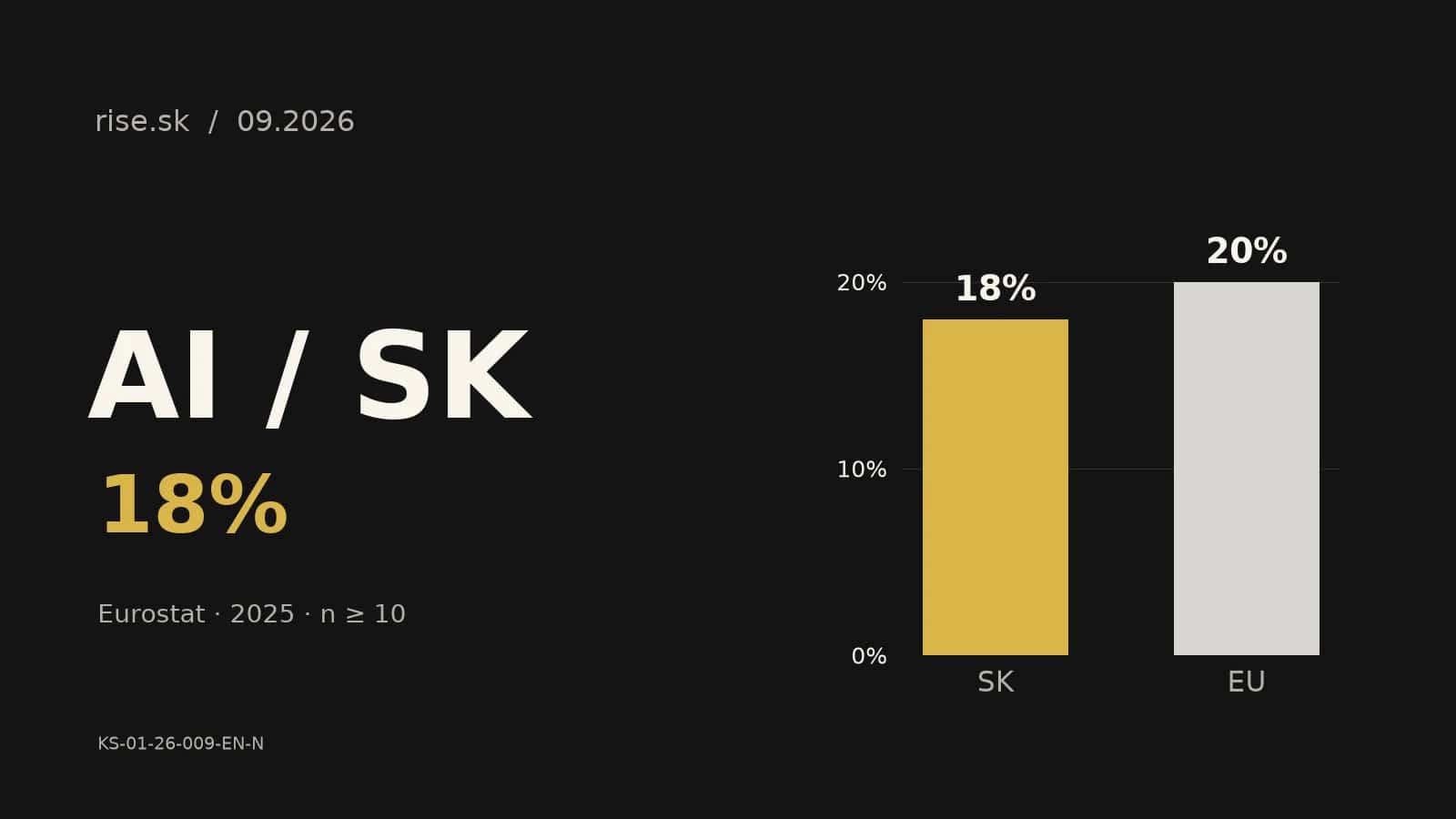
What September AI releases mean for Slovak businesses and municipalities. Eurostat data, practical scenarios and a modelled calculation of time released.

GrantAI monitors grant calls, matches them to company profiles, prepares eligibility analysis, and drafts application materials. Demo and pilot for grant teams.