Regulation designed in
VAT and retention are built in from the start, and so is e-invoicing, against the rules that apply to how you operate.
CUSTOM SOFTWARE DEVELOPMENT
Slovak and Czech companies call us when processes and software stop lining up. Analysis sets the first operational stage, and integrations, migration and whatever comes next get scoped against it.
What we build
01
Orders, inventory, approvals, reporting. A company information system built for the process you actually run, with nothing bolted on for show.
02
An off-the-shelf tool covers part of the work and the rest stays manual. We price its licence and its limits against a build of your own.
03
We wire accounting and banking to the store and to your internal tools, over whatever APIs they expose. Nobody retypes anything.
04
It still runs and its author is long gone. Nobody inside will touch it, so we map it and take it over.
05
Clients and partners look up their own orders, pull their documents and see where a case stands. Your inbox goes quiet.
06
One app for the browser and the phone. Sign-in and roles come with it, wired to the systems you already run.
Architecture, implementation, and quality stay under one technical owner throughout delivery. Every decision also has to hold up in production.
Who this is for
The process has multiple roles, states, approvals, or external systems.
You need a custom workflow, not just an off-the-shelf SaaS tool.
Auditability and security matter, and so does long-term extensibility.
Proof · HR and payroll
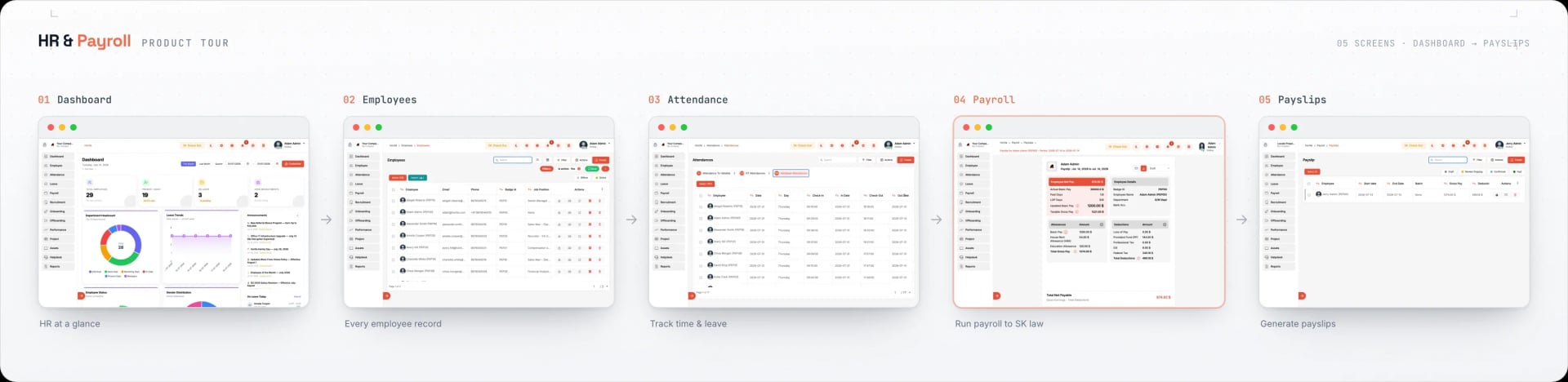
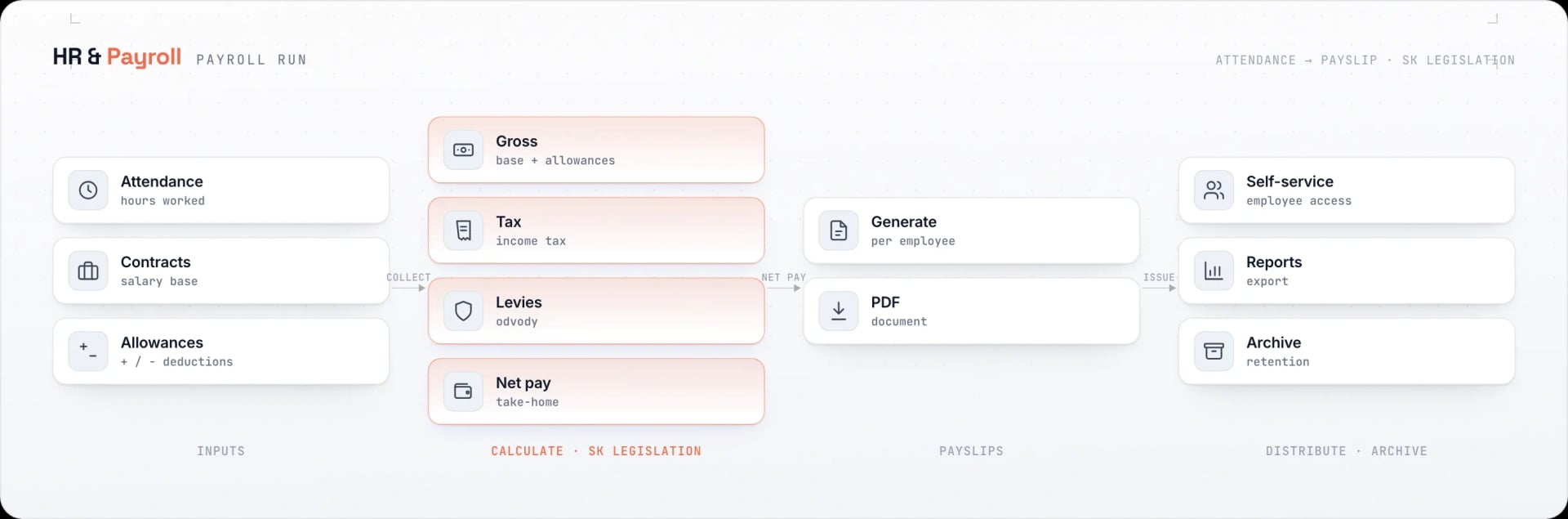
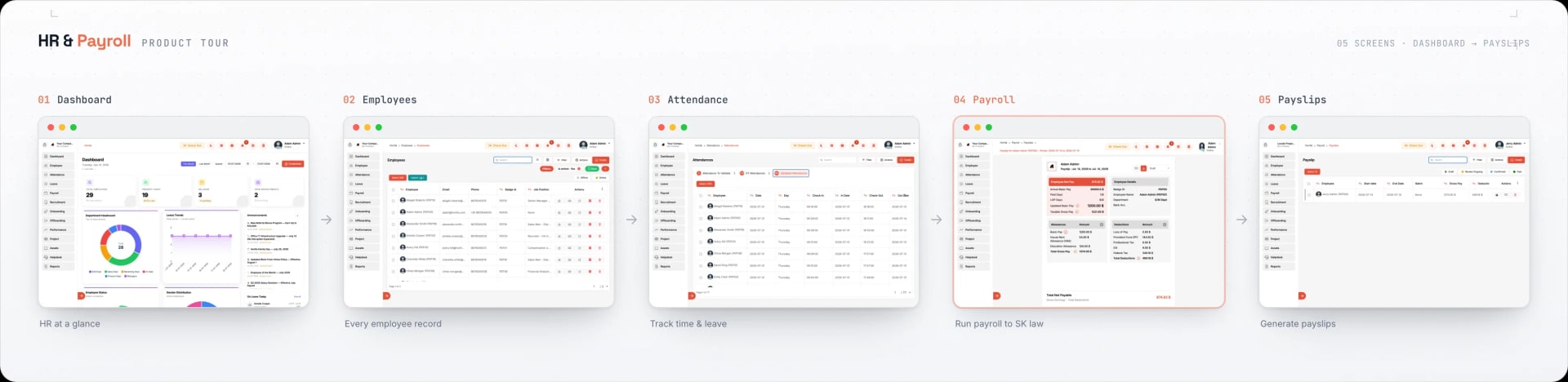
The HR and Slovak payroll system serves over 500 employees. The case study explains our delivery. Public screens use the Horilla demo, while client data remains confidential.
Pricing
from 8 000 € + VAT
Timeline: 4 to 6 weeks
What you get
15 000 to 25 000 € + VAT
Timeline: 8 to 12 weeks
Everything in Pilot, plus
from 30 000 € + VAT
Timeline: 12+ weeks
Everything in Operational stage, plus
BRIEF FOR PRICING
Email the file to rise@rise.sk or paste a share link into the form.
Before commissioning the work
Questions to ask about scope, pricing and responsibility for the project
A named offer
Built for an organisation of over 500 employees. A bespoke build, not a licence.
Modules, integrations and migration around the system already running. Not a new ERP.
Taking over, extending and repairing an app already in the stores, on iOS and Android.
Speed, defects and interface fixes in a store that already sells.
Before you commit
Criteria, a table and the real numbers behind both. When an off-the-shelf tool is enough, when your own pays off, and when the answer is to do nothing.
The real cost of both routes, when a first in-house hire makes sense, when an external team does, and where the line sits.
How we work
The initial analysis ends with a written document you can hand to a third party. We invoice against milestones, not against hope.
VAT and retention are built in from the start, and so is e-invoicing, against the rules that apply to how you operate.
We hand over the repository, documentation, and access at launch. You can continue with us or another team.
You talk to whoever writes the code. No management layer between the brief and the build.
Decision brief · Custom software development
A manual process and spreadsheets cause errors and needless re-entry. Add disconnected tools and ownership goes with them.
First paid step
One main feature, one role, one integration. The smallest scope that can actually go live.
Quick estimate
Three values are enough for a first estimate. The result updates instantly.
Indicative annual cost
€40,250.00 / year
A cost model using 46 working weeks, not guaranteed savings.
What we need from the client
Email the file to rise@rise.sk or paste a share link into the form.
How to prepare a project briefWhen it is not the right move
A simple presentation website without a custom process is enough.
The process is not described and there is no clear decision owner yet.
Questions
When an off-the-shelf tool covers only part of the process and the workarounds now cost too much time or create too many errors. We compare simpler options first.
It follows the process, the team, the integrations and how the system will be operated. We explain the choice in the architecture proposal so a future supplier can understand it too.
We agree security requirements around the sensitivity of the data and the operation. Access is limited to what is needed, changes are tested, and recovery is agreed before launch.
Ask for a comparable workflow and get acceptance criteria in writing. Settle who owns the process on your side and who will hold the source code, then ask separately what support will cost.
We look at what you could buy or extend. Integration is where the cost hides, since APIs, permissions, licences and data ownership all need checking, and custom code should fill only what is left.
Nothing moves until data mapping, a trial import, record counts and the rollback are all agreed. Handover means code, documentation and whatever access sits with us. Support is agreed separately.